Colored Crew Socks have moved beyond the gym drawer. They now add a bright stripe beneath jeans, a playful flash above sneakers, or a small color accent to a work outfit. Their appeal is easy to see: they are affordable, visible, and simple to change. But popularity is more than personal style. Comfort, durability, fit, and the way people shop also matter.
Grand View Research valued the global socks market at USD 42.7 billion in 2023 and projected a 6.4% compound annual growth rate from 2024 to 2030. This figure covers socks broadly, not Colored Crew Socks alone. It offers useful context, but it does not prove that colorful crew styles drive the market’s growth. That distinction matters. A careful look should also consider fashion cycles, self-expression, gifting, and everyday use, rather than treating one market estimate as the whole story.
There is a source gap. No verifiable article or named specialist quotation was provided, so I cannot responsibly attribute a direct quote to a “Colored Crew Socks” expert. Inventing one would weaken the evidence. This introduction instead sets up a grounded discussion of why the style resonates worldwide—and where assumptions about its popularity need closer scrutiny. A colorful sock can catch the eye. Its comfort and quality help keep it in the drawer rotation.
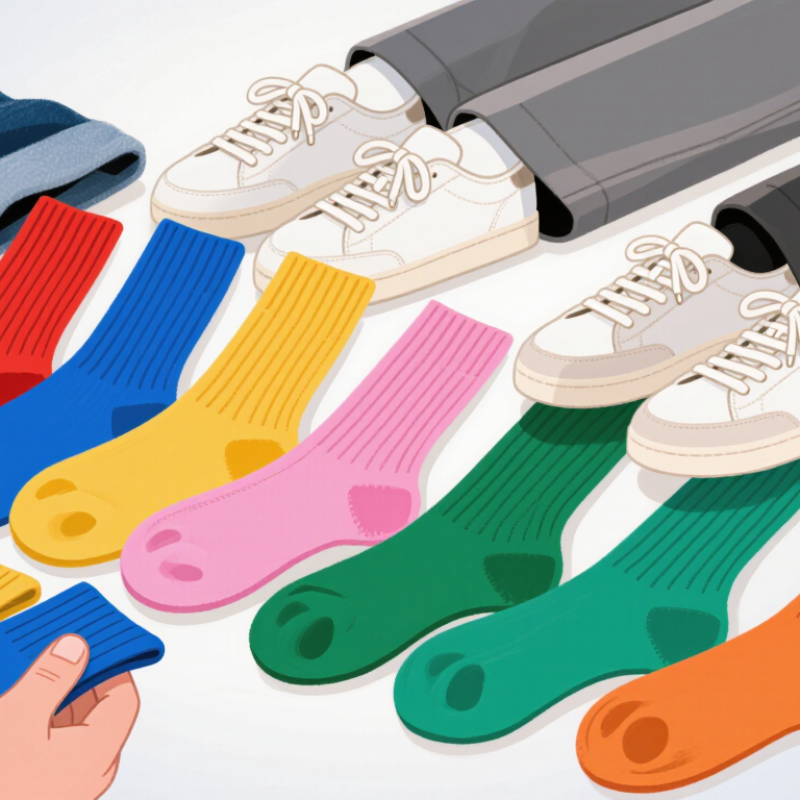
A colored crew sock is defined by two features: its height and its appearance. “Crew” usually describes a leg length that rises above the ankle toward the mid-calf, though there is no single measurement used by every maker. The colored part may come from dyed yarn or from a pattern knitted into the fabric. Look closely and you may see ribbing at the cuff, a shaped heel, and a closed toe. Small details matter.
Material affects how the sock feels and performs. Cotton can feel soft and breathable; synthetic fibers are often used to improve stretch, drying, or abrasion resistance. Textile Exchange’s Materials Market Report 2024 estimates that global fiber production reached 124 million tonnes in 2023, with polyester accounting for 57% and cotton about 20%. Those figures describe the wider textile supply, not sock sales, but they help explain why crew socks commonly use blends. The label is useful, though it does not tell the whole story.
Color also changes how construction is perceived. A bright cuff makes the crew height easy to notice, while a dark heel can disguise wear. Fit still depends on elastic recovery, knitting density, and foot shape—not color alone. And “mid-calf” can be a little vague. A sock that sits neatly below one person’s calf may bunch on another, so checking the actual garment is more reliable than trusting the name.
Crew socks began as practical layers. Their height covered the ankle and lower calf, helping protect skin inside work shoes and boots. Knitted ribs also helped keep fabric in place. For decades, muted colors suited uniforms and everyday wear.
That role has widened. As casual clothing and sneakers became common, the sock cuff moved into view. Color now offers an easy way to add contrast: a bright stripe beneath rolled trousers, or a patterned cuff above a plain shoe. Small detail. Big visual effect. Grand View Research estimated the global sock market at US$42.2 billion in 2022, with projected annual growth of 6.7% from 2023 to 2030. This estimate describes the market, not proof that colorful styles alone drive growth.
Material choices matter too. Textile Exchange’s Materials Market Report 2024 estimated global fiber production at 124 million tonnes in 2023, with polyester making up about 57%. That scale helps explain why everyday socks can be produced in many textures and colors, though fiber production figures do not measure sock sales. The shift from utility to fashion is not complete, either. Many people still choose socks for warmth, fit, and durability before appearance. I may be overstating the style story; comfort remains the quiet reason a pair gets worn again.
Colored crew socks make comfort feel personal. The color does not change the cushioning, but it can make a familiar outfit feel more like yours. A soft cotton blend, smooth toe seam, and snug cuff matter during a long day on your feet. Bright stripes are no substitute for a good fit.
Color also gives ordinary clothes more options. A pair of rust-orange socks can echo a small detail on a sweater, while deep green adds contrast beneath rolled-up jeans. For a quieter look, muted blue works with gray trousers without drawing much attention.
Small detail, big shift. Getting the balance right can take a little trial and error; I have worn combinations that looked better in my head.
The crew height offers a useful patch of color above sneakers or boots, especially when sitting or walking lifts a trouser hem. That visibility makes socks an easy way to experiment without changing an entire wardrobe.
Comfort still deserves the final say: a cuff that digs in or fabric that traps heat can spoil the look.
Not always, though. Some days, the mismatched pair is the one that feels most like you.
Colored crew socks appeal across cultures because they offer a small, practical way to show personality. A bright stripe can echo a school color, while tiny geometric shapes may feel playful without dominating an outfit. The crew length also works with sneakers, boots, and many everyday uniforms. It is visible when someone sits or walks, but easy to cover when a quieter look feels right. That balance matters. People can join a trend without changing their whole wardrobe.
Age shapes the choice, but does not set strict rules. Children may enjoy bold contrasts and recognizable patterns; adults might prefer muted colors for work or choose vivid pairs for weekends. Older wearers may value warmth, soft fabric, and a comfortable cuff as much as appearance. Cultural ideas about color differ, so one shade can feel festive in one setting and ordinary in another. Practical details matter too: a snug fit, breathable material, and seams that do not rub can make a pair more wearable. Still, style is personal. A loud sock is not automatically confident, and a neutral one is not boring. I may be giving socks too much credit, but their small scale makes experimentation feel low-risk.
Retail has made colored crew socks easy to find and simple to compare. Shops often display them near everyday basics, where a bright stripe or bold pattern catches the eye. Online listings add more choices, clear size guides, and customer photos. That helps shoppers imagine how a pair might look with jeans, work clothes, or trainers. Still, screen colors can be misleading.
Sports have also helped make visible socks feel familiar. Players wear crew-length styles during training and competition, so fans see them in motion, not just on shelves. The height offers practical coverage, while color can echo a team palette or stand apart from it. Comfort and fit matter more than appearance during long sessions.
Social media speeds up the cycle. A close-up outfit photo or short styling video can show how socks change a simple look. Viewers may copy the color pairing, then share their own version. Small details matter. Yet trends can make certain shades seem essential when they are not. Personal taste, fabric feel, and a secure fit are better reasons to choose a pair.
Retail makes colorful styles easy to discover and buy, while sports and streetwear bring crew socks into visible everyday outfits. Social media helps those looks travel across borders. The chart shows the expanding reach of social platforms—not sock-specific sales or demand.
Source: DataReportal, annual Global Digital Reports. Figures are reported social media user identities and may not represent unique individuals.
It has a leg that usually rises above the ankle toward mid-calf, plus dyed yarn or a knitted pattern. Exact heights vary.
No single measurement is used by every maker. Check the sock itself; “mid-calf” can mean different things on different legs.
Look for a ribbed cuff, shaped heel, and closed toe. Small details matter.
Cotton can feel soft and breathable. Synthetic fibers may improve stretch, drying, or abrasion resistance, so many socks use blends.
Not by itself. Fit depends more on elastic recovery, knitting density, and foot shape. A dark heel may disguise wear, but it cannot prevent it.
Retail displays and online listings offer visible patterns, size guides, and customer photos. Screen colors can still be misleading.
Sports make crew-length socks familiar in motion. Outfit photos and short videos spread color ideas, though a trend is not a need.
Compare the actual height, fabric feel, and fit with your shoes. A bright cuff may stand out, but comfort matters more.
Colored Crew Socks have evolved from practical everyday essentials into a simple way to add personality to an outfit. Typically rising to the mid-calf, crew socks offer comfortable coverage and can be made in different materials, patterns, and colors. While their original appeal was largely functional, changing styles have helped make them a familiar part of casual fashion.
Color gives wearers more choices, from coordinating socks with an outfit to using a bright shade or playful pattern as a point of self-expression. This versatility helps Colored Crew Socks appeal to people of different ages and cultural backgrounds, with preferences varying from subtle designs to bold combinations. Retail variety, their use in sports and everyday activities, and the ease of sharing outfit ideas on social media have all helped increase their visibility worldwide. Together, comfort, choice, and personal style explain why crew socks in color remain popular.