Home Socks are becoming a practical category for home textile businesses, not merely a seasonal accessory. Consumers now expect comfort, warmth, and visual appeal in everyday indoor products. Grand View Research valued the global socks market at approximately USD 47.6 billion in 2023. It also forecasts continued growth through 2030. Meanwhile, Grand View Research’s home textiles analysis identifies comfort, wellness, and home-based lifestyles as important demand drivers.
The opportunity is visible in small details. A customer working beside a cold window may choose cushioned Home Socks with anti-slip soles. Another may prefer soft bamboo blends, neutral colors, and gift-ready packaging. These products occupy little shelf space. They can also support repeat purchases and seasonal collections. Textile trend analyst Andrea Bell has emphasized, “The home is becoming a place for comfort, connection, and personal expression.” This perspective explains why socks can belong inside a broader home textile strategy.
However, the category is not automatically profitable. Poor elastic recovery, excessive pilling, or unclear fiber labeling can quickly damage trust. Sustainability claims need evidence, not attractive wording. Textile Exchange’s Materials Market Report shows growing attention toward preferred fibers and responsible production. Businesses should therefore test shrinkage, wash durability, warmth, and packaging before scaling. One weakness remains. Many market reports combine everyday socks with sports and medical products, making Home Socks data less precise. That gap requires careful customer research. Still, a well-designed collection can turn an ordinary drawer into a quiet, repeatable retail opportunity.
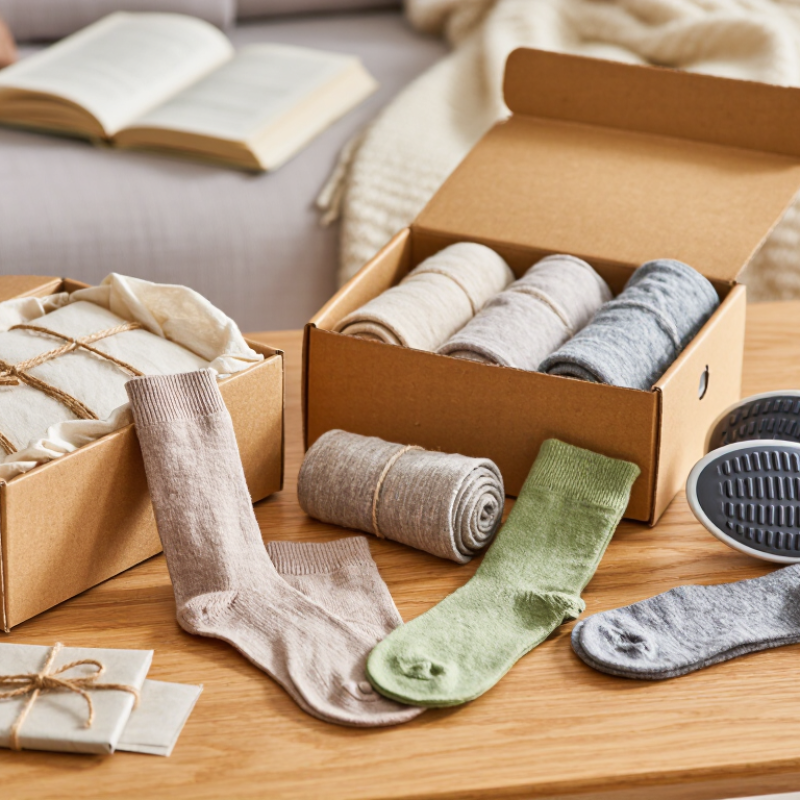
Home socks are soft, indoor-focused socks designed for warmth, relaxation, and safe movement across household floors. They may include terry cushioning, breathable knits, elastic cuffs, or silicone grip patterns. Unlike outdoor socks, they are sold as part of a home comfort experience. The category boundary is not perfect. Some products belong to both apparel and home textiles.
This overlap creates a practical market opportunity. Grand View Research estimated the global home textiles market at about USD 133.5 billion in 2023, with continued growth expected through 2030. Meanwhile, Textile Exchange reported global fiber production at roughly 124 million tonnes in 2023. These figures show two pressures: strong household demand and rising material scrutiny. Home socks can connect both areas through recycled fibers, traceable yarns, and durable construction.
Comfort sells, but details decide repeat purchases.
A buyer may notice a warm pair beside a sofa, then inspect its wash performance and grip. For a home textile business, useful specifications include yarn composition, knitting gauge, cushioning zones, size range, and packaging weight. Seasonal colors can support bedding and blanket collections. However, adding too many features may increase cost without improving comfort. Small-scale wear testing remains essential. A product can look premium, yet twist after three washes. That is a costly lesson. Reliable suppliers should provide material records, sample tests, and consistent measurements before larger production.
Home socks answer a simple consumer need: comfortable warmth indoors.
Cold floors can make mornings unpleasant, especially in bedrooms, kitchens, and poorly insulated apartments. Soft socks create a small barrier between skin and hard surfaces. They also support people who dislike wearing outdoor shoes inside.
Comfort, however, is more than thickness.
Consumers notice loose cuffs, rough seams, trapped heat, and fabric that loses shape after washing. In product evaluations, I would check stretch recovery, toe-room, grip placement, and drying time. A breathable cotton blend may suit daily use, while warmer fibers can help during colder months. The right choice depends on the home.
Fit matters greatly. Poorly sized socks slip under the heel or press against the ankle. That irritation can turn a useful product into a forgotten drawer item.
Many shoppers also want safer movement on tile or wood floors. Carefully placed anti-slip details can improve confidence, but they should not promise complete protection from falls.
Small details matter.
Home socks can also meet practical household needs. Washable materials reduce replacement frequency, and clear care instructions help preserve softness. Neutral colors suit shared spaces, while playful patterns offer personal expression.
Yet sustainable claims require evidence, not attractive wording. This is where my own assumptions need checking: consumers may value eco-friendly materials, but they still expect comfort, durability, and fair pricing. For home textile businesses, listening to these trade-offs is more useful than chasing one fashionable feature.
High-quality home socks begin with the right material balance. Textile Exchange’s 2024 Materials Market Report records 124 million tonnes of global fiber production in 2023. Polyester represented about 57% of that volume. Its durability and quick drying suit daily home use. However, recycled or conventional polyester alone may feel warm and less breathable.
Cotton offers a familiar, soft touch. Wool manages moisture and temperature well, especially during colder nights. Bamboo-derived viscose can feel smooth, but its environmental value depends on responsible processing. A blend often performs better than one fiber.
Look for reinforced toes, flat seams, gentle compression, and elastic cuffs that stay up without marking the skin. Silicone or rubberized grips can improve safety on smooth floors. Still, grip patterns may reduce flexibility after repeated washing. This detail deserves testing, not assumptions.
Tips: Check fiber percentages, seam strength, and shrinkage after five washes. Ask suppliers for abrasion, colorfastness, and pilling results. A soft sample can mislead. Wear-test it on tile, wood, and carpet. In my experience, the best home sock feels almost unnoticed, but that standard is difficult to measure. Examine comfort after several hours, not only during a quick fitting. Use clear care labels, because even excellent fibers fail when washed too hot.
Home socks can do more than fill a shelf. They can turn ordinary homewear into a daily comfort experience. Grand View Research’s 2024 socks market analysis estimated the global market at approximately US$47 billion in 2023. It also projects steady growth through 2030. This creates room for home textile businesses to develop slippers, lounge sets, and seasonal gift collections around one product. However, market growth does not guarantee sales. Poor sizing, loose yarns, or slippery soles can quickly weaken customer trust.
Product variety becomes more valuable when each option solves a clear household need. Offer breathable cotton socks for summer, thermal wool blends for winter, and cushioned designs for long indoor use. Add neutral colors for everyday rooms and subtle patterns for gift buyers. Textile Exchange reported that global fiber production reached about 132 million tonnes in 2023. Its 2024 Materials Market Report also highlights rising attention to recycled and lower-impact materials. Businesses should therefore provide traceable fiber information, not vague environmental claims.
Brand value grows through consistent details. A soft hand-feel, clean stitching, practical packaging, and accurate care labels make the product feel dependable. Small details matter. In product reviews, I would test socks after repeated washing, not only before photography. That step is often missed. A well-planned range can support higher perceived quality, but businesses should avoid adding too many colors without sales evidence. Customer feedback, return reasons, and repeat-purchase data should guide the next collection.
Evidence-based product planning dimensions for building a diversified, comfortable, durable, and clearly positioned home-sock collection.
| Product Dimension | Reference Data or Standard | Recommended Product Variety | Business and Brand Value | Relevant Test or Reference |
|---|---|---|---|---|
| Fiber Composition | Typical moisture regain values are approximately 7–8.5% for cotton, 13–18% for wool, and about 0.4% for polyester under standard textile conditions. | Offer cotton-rich everyday socks, wool-blend warmth socks, and polyester or recycled-polyester performance styles. | A clearly explained fiber structure allows customers to choose products by comfort, warmth, moisture management, and use occasion rather than by appearance alone. | Textile fiber moisture-regain reference data; ISO 1833 series for quantitative fiber analysis. |
| Use Occasion | Home socks can be organized around common indoor activities such as sleeping, relaxing, working from home, light indoor exercise, and cold-weather lounging. | Create separate lines for Everyday Comfort, Warmth, Indoor Activity, and Gift Sets. | Occasion-based merchandising makes the assortment easier to navigate and supports cross-selling across multiple household needs. | Product assortment planning framework based on usage occasions. |
| Thermal Positioning | Wool and wool blends generally provide greater warmth retention than lightweight cotton or polyester constructions because of fiber structure and trapped air. | Develop lightweight, midweight, and heavyweight options for different climates and indoor temperature preferences. | A visible warmth ladder reduces product overlap and gives the collection a practical, easy-to-understand structure. | Thermal comfort principles used in textile product development. |
| Moisture Management | Fiber moisture regain and fabric construction influence how a sock handles moisture. Fiber content alone does not determine final performance; knit density and finishing also matter. | Add breathable everyday styles, moisture-management styles, and warmer low-breathability styles for cold indoor environments. | Performance claims become more credible when supported by fiber composition, fabric construction, and test results. | ISO 11092 for thermal and water-vapour resistance; ISO 15496 for textile moisture management measurement. |
| Cushioning and Comfort | Cushioning is affected by yarn selection, terry-loop structure, sole thickness, elastane content, and pressure distribution. | Provide smooth everyday soles, cushioned lounge soles, and targeted heel-and-toe reinforcement. | Comfort-focused construction creates meaningful product differentiation and supports premium positioning without relying only on decorative design. | Product construction evaluation; compression and comfort testing should be defined for the intended end use. |
| Slip Resistance | Indoor socks with silicone or printed grips require testing for grip performance, adhesion, durability, and laundering stability. There is no single universal grip value for every home-sock application. | Offer grip socks for smooth indoor floors and non-grip socks for sleeping or relaxed use. | Separating grip and non-grip products improves safety communication and avoids unsuitable use expectations. | ISO 20344 and applicable regional slip-resistance methods may be adapted according to product claims and intended use. |
| Durability | Pilling, abrasion, seam strength, and dimensional change are separate performance factors and should not be represented by one durability score. | Build a core durable range, a soft premium range, and a seasonal fashion range with clearly different performance priorities. | A transparent performance hierarchy helps manage customer expectations and supports repeat purchase based on product reliability. | ISO 12945-2 for pilling; ISO 12947 for abrasion; ISO 5077 for dimensional change; ISO 13935 for seam tensile properties. |
| Fit and Size Coverage | Sock fit depends on foot length, stretch recovery, welt construction, heel shaping, and size grading. Regional sizing systems should be clearly labeled. | Provide adult, children’s, and extended-size options where demand supports them; display foot-length guidance instead of relying only on generic labels. | Better size communication reduces fit-related returns and makes the assortment more inclusive. | ISO 9407 shoe-size measurement system; regional labeling rules should be checked before sale. |
| Care and Wash Performance | Washing can affect shrinkage, colorfastness, pilling, elastane recovery, and grip adhesion. Care instructions should match the tested product construction. | Use low-maintenance everyday socks, delicate wool-blend socks, and clearly labeled grip or specialty products. | Accurate care communication protects product performance and strengthens trust after purchase. | ISO 6330 for domestic washing and drying procedures; ISO 105-C06 for colorfastness to domestic and commercial laundering. |
| Color and Design Architecture | A coordinated color system can cover core neutrals, seasonal colors, patterns, and giftable combinations without requiring a completely different product structure for every color. | Combine neutral core colors, limited seasonal colors, and pattern-led capsules using shared base constructions. | Consistent color architecture improves shelf recognition, simplifies replenishment, and enables collections or multi-pair gift packaging. | Assortment architecture and visual merchandising practice. |
| Sustainability Information | Sustainability claims should identify the material, recycled content where applicable, manufacturing scope, and certification basis. General claims such as “eco-friendly” require substantiation. | Add traceable material options, reduced-packaging formats, and care guidance that supports longer product life. | Specific, verifiable information strengthens credibility more effectively than broad environmental language. | ISO 14021 for self-declared environmental claims; applicable textile certification and labeling requirements. |
| Packaging and Merchandising | Home socks are suitable for single-pair, multi-pair, seasonal, and gift-oriented packaging formats. | Use single pairs for trial, multi-packs for value, and coordinated sets for gifting or seasonal campaigns. | Multiple pack formats expand price architecture and allow the same core product family to serve different shopping missions. | Retail assortment and pack-price architecture principles. |
Before adding home socks to a textile range, businesses should study customer needs, not only product trends. A soft pair may look simple, but comfort depends on fiber blend, stretch recovery, seam placement, and moisture control. Cotton can feel familiar, while recycled fibers may support sustainability goals. Each choice affects cost, durability, and care instructions.
Start with a small, controlled product test. Offer several sizes and inspect the socks after repeated washing. Check whether the cuff leaves marks, the heel shifts, or the fabric pills. Ask customers about warmth, softness, fit, and color stability. Real feedback often reveals problems that factory samples hide. Sizing deserves extra attention. Home socks are frequently worn with slippers, so thickness can change the fit.
Businesses should also calculate packaging, storage, shipping volume, and return risks. Bulky winter styles may sell well in cold months but move slowly afterward. Lightweight designs can serve more seasons.
Product descriptions must state materials, washing guidance, and available sizes clearly. Local labeling and textile safety requirements should be verified before launch. Do not assume a familiar product needs less inspection.
A pilot may expose weak margins or inconsistent sizing. That is useful information. It is better to adjust early than disappoint repeat customers. Reliable suppliers should provide material details, sample records, and quality checks for every production batch. The first collection does not need many styles. It needs evidence that the socks stay comfortable after real home use.
Home socks are soft socks for indoor warmth, relaxation, and steadier movement. They suit bedrooms, kitchens, and living rooms with cold floors.
Home socks focus on softness, cushioning, breathability, and indoor grip. They support comfort at home rather than outdoor protection.
Look for soft yarns, flat seams, roomy toes, and gentle cuffs. Thick fabric alone may trap heat. Small details matter.
Cotton feels familiar and soft. Wool helps manage warmth and moisture. Polyester dries quickly and resists wear. Blends often provide better balance.
Grip patterns can increase confidence on tile or wood floors. They do not guarantee protection from falls. Test flexibility after repeated washing.
Inspect fiber percentages, seam strength, stretch recovery, and shrinkage. Wear-test samples on tile, wood, and carpet. A soft sample can mislead.
Poor sizing can make the heel slip or the ankle feel tight. Check the size range and toe space before production or purchase.
Recycled fibers, traceable yarns, and durable construction may reduce material concerns. Claims need evidence. Comfort and fair pricing still matter.
Clear care labels help preserve softness and shape. Check drying time and colorfastness. Even good fibers can fail after overly hot washing.
Request material records, test reports, and consistent measurements. Compare samples after several washes. A product may look premium yet twist later.
Home Socks are a practical and versatile category within the home textile market, combining everyday comfort with lifestyle appeal. Designed for indoor use, they meet consumer needs for warmth, softness, convenience, and safe movement around the home. Their value can be enhanced through thoughtful details such as breathable fabrics, gentle stretch, durable construction, moisture management, and non-slip soles. Material choices, including cotton blends, wool, bamboo fibers, or recycled textiles, can help businesses serve different seasons, preferences, and price levels.
Adding Home Socks can strengthen a home textile product range by introducing a compact, giftable, and frequently used item. They also provide opportunities to develop coordinated colors, patterns, packaging, and collections that support a clear brand identity. Before entering this category, businesses should evaluate target customers, material quality, sizing, production consistency, sourcing capacity, pricing, packaging, and demand by season. With careful planning, Home Socks can complement existing textile products while creating additional value through comfort, functionality, and attractive design.