Why Choose Athletic Crew Socks for Wholesale?

Time:2026-10-24 Author:Sienna
0%

Why Choose Athletic Crew Socks for Wholesale? The answer begins with a simple retail reality: customers notice comfort before they notice branding. Athletic Crew Socks support active routines, long workdays, gym sessions, and weekend travel. Their mid-calf height offers familiar coverage, while cushioned soles can soften repeated impact. A secure arch band may also reduce slipping inside running shoes.

Dr. Karen Leonas, a textile sustainability expert, offers a useful perspective: “Performance and responsibility must be considered across the product life cycle.” That principle matters to wholesale buyers. Fiber selection, knitting quality, moisture management, sizing consistency, and packaging all influence the product’s real value. A low price can look attractive, but weak elastic or rough seams may create returns and customer complaints. Small details become expensive quickly.

Athletic Crew Socks also provide flexible merchandising opportunities. Retailers can sell them beside footwear, fitness clothing, uniforms, or travel essentials. Neutral colors suit practical shoppers. Bright patterns create stronger shelf visibility. Bulk purchasing may improve unit economics, but only when the supplier maintains dependable quality between shipments. This is where buyers should remain cautious. Product samples can feel excellent, yet later batches may differ slightly in thickness or stretch. Written specifications, inspection procedures, and clear communication help reduce that risk. The best wholesale choice is not merely the cheapest carton. It is a reliable product that performs consistently, fits the intended customer, and supports a retailer’s reputation over time.
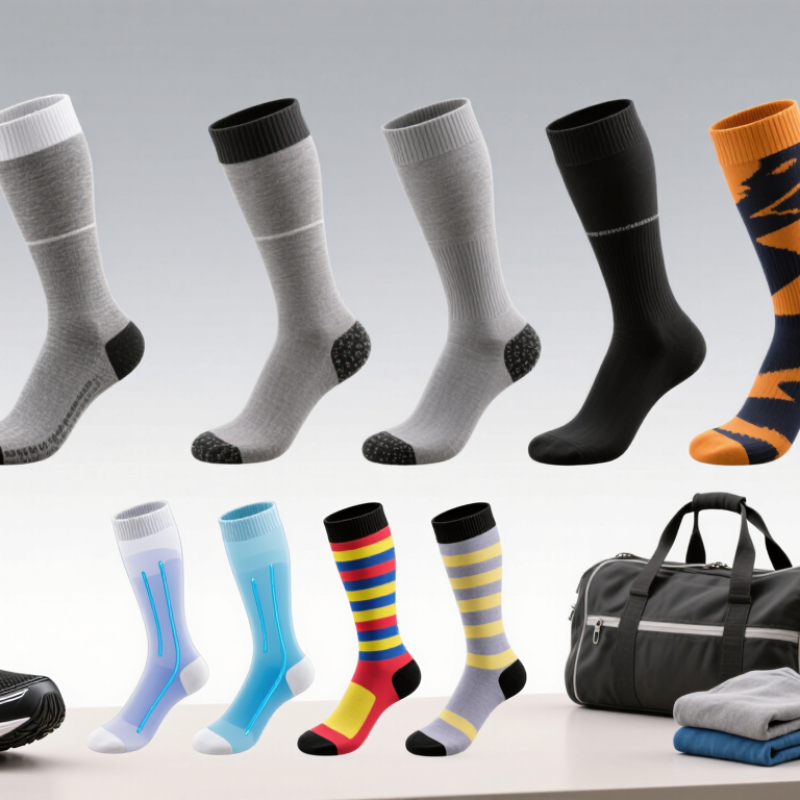
Why Choose Athletic Crew Socks for Wholesale?

What Are Athletic Crew Socks and How Do They Differ?

Athletic crew socks are mid-calf socks designed for movement, training, and repeated washing. Their height usually sits between the ankle and lower calf. Unlike basic crew socks, they often combine cushioned zones, arch support, ventilation panels, and moisture-managing fibers. The construction is more purposeful. A smooth toe seam can reduce rubbing inside a running shoe. A ribbed cuff can help the sock stay in place during squats or court play.

The difference is not always visible on a product photograph. Athletic models commonly use engineered knitting, reinforced heels, and denser areas under the forefoot. These details improve durability and comfort during high-friction activity. Grand View Research valued the global socks market at about USD 47.43 billion in 2023, with continued growth projected through 2030. The report signals strong demand, but it does not prove every performance claim. That assumption needs checking. Wholesale buyers should request fiber content, size measurements, wash-test results, and abrasion information before placing large orders.

Material selection also affects purchasing decisions. Textile Exchange’s Materials Market Report 2024 states that polyester represented more than half of global fiber production in 2023. Polyester can dry quickly, while cotton may provide a softer hand feel. Neither option is perfect. Blended yarns often balance comfort, stretch, drying speed, and cost. For wholesale programs, consistent sizing matters as much as appearance. A sock that slips after three washes creates returns, complaints, and wasted inventory. Small details become expensive at scale.

Which Performance Features Matter in Wholesale Athletic Crew Socks?

Wholesale athletic crew socks should be judged by performance, not appearance alone. Moisture control is essential during training, commuting, and repeated washing. A 2024 Textile Exchange materials report states that polyester represented about 59% of global fiber production in 2023. However, fiber choice does not guarantee comfort. Yarn structure, ventilation zones, and finishing quality matter too.

Look for breathable mesh panels across the instep and reinforced cushioning under the heel and forefoot. These details can reduce heat and slow visible wear. A secure arch band may limit movement, while a smooth toe seam helps prevent rubbing inside tight footwear. According to Grand View Research, the global sports apparel market continues expanding through the decade, increasing pressure on wholesalers to offer reliable technical products. Still, market growth does not excuse weak testing. Evaluate shrinkage, colorfastness, pilling, and elastic recovery after at least five wash cycles. One sample is not enough.

Tips: Request laboratory test records and production samples before placing large orders. Check size consistency across colors. Ask whether recycled fibers affect stretch or drying speed. A softer blend may feel better, but it can lose shape sooner. That trade-off deserves honest review.

How Do Athletic Crew Socks Support Comfort and Everyday Performance?

Athletic crew socks are more than a basic wholesale item. They support comfort during walking, training, commuting, and long workdays. A well-designed pair usually reaches mid-calf, protecting the lower leg from shoe edges and light friction. This coverage also helps the sock stay in place during repeated movement.

Comfort begins with fabric balance. Moisture-managing fibers can help keep feet drier, while breathable knitting allows heat to escape. Soft cushioning under the heel and forefoot reduces pressure on hard floors. A supportive arch band may limit bunching without feeling restrictive. Flat toe seams matter too. Small details often decide whether a wearer finishes the day comfortably.

Durability affects everyday performance and wholesale value. Reinforced heels and toes can handle frequent washing, especially when care instructions are followed. Still, thicker cushioning is not always better. It may feel warm inside a close-fitting shoe. Buyers should compare stretch, recovery, sizing, and ventilation for their users. From practical wear testing, socks that remain smooth after several hours usually create fewer complaints. That observation is useful, but it is not universal. Foot shape, activity level, and climate can change the result. Bulk purchasing works best when comfort is tested before volume orders.

Why Choose Athletic Crew Socks for Wholesale? - How Do Athletic Crew Socks Support Comfort and Everyday Performance?

Performance Dimension Typical Wholesale Specification or Range Comfort and Performance Benefit Wholesale Relevance
Crew-Length Coverage Usually reaches the mid-calf, with the exact height depending on size and construction. Provides coverage between the shoe opening and lower leg while helping reduce friction from footwear edges. Suitable for sports, school, work, casual wear, and uniform programs, supporting broad customer demand.
Fiber Composition Common constructions use a blend of cotton or synthetic fibers with approximately 1–5% elastane or spandex for stretch and recovery. Combines softness, shape retention, stretch, and resistance to repeated movement. Multiple fiber options allow buyers to select products for different price points, climates, and end uses.
Moisture Management Performance blends commonly use polyester, polyamide, or polypropylene fibers; moisture results vary by yarn, knit density, and finishing. Helps move perspiration away from the skin and supports a drier in-shoe environment during activity. Adds practical value for athletic, outdoor, travel, and workwear channels without requiring a specialized product category.
Cushioned Zones Commonly positioned under the heel and forefoot; cushioning may be light, medium, or full-foot depending on the design. Adds softness and impact absorption in areas exposed to repeated contact with the shoe. Creates clear product tiers, enabling wholesale buyers to offer basic, mid-range, and performance-focused options.
Arch Support Often provided through a knitted compression band or reinforced structure around the midfoot. Helps the sock stay in place and can reduce bunching during walking, running, or training. Improves perceived fit and reduces common return or complaint risks related to slipping and twisting.
Cuff Construction Ribbed or elasticized cuffs are commonly used to provide stretch and hold without excessive bulk. Helps keep the sock up while allowing easier on-and-off use. Supports a consistent fit across different foot shapes and makes the product suitable for everyday retail assortments.
Seam Design Toe seams may be flat-linked, low-profile, or conventionally stitched, depending on the manufacturing method. A low-profile toe area can reduce pressure points and irritation inside the shoe. Provides a useful specification for comparing comfort levels between entry-level and premium wholesale products.
Reinforced Wear Areas Reinforcement is commonly added at the heel, toe, or both areas through denser knitting or additional yarn. Helps manage abrasion in locations that receive frequent contact and movement. Supports repeat-use positioning and can improve product value when durability is important to the buyer.
Size Assortment Wholesale assortments commonly cover several adult sizes, with sizing based on foot length or shoe-size equivalents. A broader size range improves the likelihood of a secure, comfortable fit. Allows distributors and retailers to plan mixed-size cartons and reduce overstock caused by narrow size coverage.
Color and Design Options Common options include white, black, gray, navy, color-blocked designs, stripes, and minimal athletic detailing. Supports coordination with athletic shoes, uniforms, casual outfits, and workplace clothing. Enables channel-specific assortments and seasonal merchandising without changing the basic sock format.
Packaging and Multipacks Common retail formats include single pairs and multipacks of 2, 3, 6, or more pairs; pack sizes vary by order program. Gives consumers convenient replacement options and supports regular-use purchasing. Multipacks can simplify carton planning, improve unit economics, and suit value-oriented wholesale distribution.

Note: The specifications shown are common industry ranges and construction practices for athletic crew socks. Actual performance depends on fiber selection, knitting technique, cushioning level, finishing process, sizing, and care instructions.

What Are the Business Benefits of Buying Athletic Crew Socks Wholesale?

Why Choose Athletic Crew Socks for Wholesale?

Wholesale athletic crew socks can improve margins, product consistency, and customer satisfaction.

According to Grand View Research, the global sports apparel market reached approximately $214.6 billion in 2023. It is projected to grow at a 6.5% annual rate through 2030. This growth supports steady demand for practical, performance-focused accessories.

Bulk purchasing usually lowers the unit cost and reduces repeated shipping expenses. Retailers can also maintain consistent colors, sizes, and packaging across multiple sales channels.

Crew socks are easy to display near shoes, gym clothing, or school uniforms. Their familiar shape requires less customer education. That makes inventory movement simpler.

However, the lowest quotation is not always the best deal.

Weak elastic, thin heel padding, or inconsistent sizing can increase returns and damage trust.

Material selection also affects business value. Textile Exchange reported that polyester represented about 57% of global fiber production in 2023. Buyers may therefore compare cotton blends, recycled polyester, moisture control, and durability claims carefully.

Ask suppliers for fabric composition, wash testing, size measurements, and production samples. A sample may look excellent yet shrink after several washes. That is easy to miss.

Reliable wholesale decisions combine landed cost, testing evidence, reorder stability, and realistic customer feedback. Quantity helps, but quality control protects the margin.

How Should Buyers Evaluate Suppliers, Quality, and Order Terms?

Choosing athletic crew socks for wholesale requires more than comparing unit prices. Buyers should inspect supplier experience, production records, and communication habits. Ask for physical samples made with the same yarn, knitting method, and cushioning level as the bulk order. A polished sample can still mislead.

Check the sock closely. The toe seam should feel flat against the skin. Elastic should hold the calf without leaving deep marks. Examine the heel shape, arch support, mesh ventilation, and fabric recovery after washing. Fiber content matters, but percentages alone do not prove performance.

Request wash-test data, colorfastness results, and size measurements. Try the socks during running or training. Small details become obvious after an hour.

Order terms deserve equal attention. Confirm the minimum order quantity, size breakdown, color options, production lead time, and packaging details in writing. Include acceptable measurement tolerances and a clear inspection process. Payment schedules should match production milestones when possible.

Clarify how defects, shortages, or late shipments will be handled. Reliable suppliers answer specific questions with specific records. Vague promises create costly uncertainty.

Buyers sometimes focus too heavily on the lowest quote. That choice may ignore inconsistent sizing or delayed replenishment. Even careful evaluation has limits, so keep a trial order modest and review the results before expanding.

FAQS

What performance features matter most in wholesale athletic crew socks?

Look for moisture control, breathable mesh, reinforced heels, and cushioned forefeet. A smooth toe seam can reduce rubbing inside tight shoes. A secure arch band may prevent bunching during movement. Appearance alone is not enough.

How can buyers test moisture control and ventilation?

Inspect mesh panels across the instep. Wear the socks during training or commuting, then check heat and dampness. Compare drying speed after washing. One short test may mislead.

Is polyester content a guarantee of comfort?

No. Fiber content alone cannot prove comfort or durability. Yarn structure, knitting density, ventilation, and finishing quality also matter. A softer blend may feel pleasant but lose shape sooner. That trade-off needs honest review.

Why are cushioning and reinforcement important?

Cushioning under the heel and forefoot can reduce pressure on hard floors. Reinforced heels and toes can slow visible wear. Thicker cushioning is not always better. It may feel too warm inside a close-fitting shoe.

What should buyers check after repeated washing?

Test shrinkage, colorfastness, pilling, and elastic recovery after at least five washes. Measure sizes across different colors. Check whether the arch band still holds securely. Five washes are useful, not perfect.

How should suppliers provide samples for wholesale evaluation?

Request samples using the same yarn, knitting method, and cushioning as the bulk order. Ask for laboratory records and production samples. A polished sample can still mislead. One sample is not enough.

Which order terms should be confirmed in writing?

Confirm minimum order quantity, size breakdown, colors, lead time, and packaging details. Include measurement tolerances and an inspection process. Clarify solutions for defects, shortages, and late shipments. Vague promises create costly uncertainty.

How can buyers reduce risk before placing a large order?

Start with a modest trial order. Test the socks during running, walking, or long workdays. Review fit, ventilation, washing results, and replenishment consistency. The lowest quote may hide uneven sizing or delays. Results can vary by foot shape, activity, and climate.

Conclusion

Athletic Crew Socks are designed to provide reliable support, comfort, and performance for sports, training, work, and everyday wear. Compared with standard crew socks, they often feature moisture-wicking materials, breathable zones, cushioned soles, arch support, reinforced heels and toes, and stretchable construction for a secure fit. These features help reduce discomfort, manage sweat, improve stability, and support long hours of movement without restricting flexibility.

For wholesale buyers, Athletic Crew Socks offer practical business advantages, including consistent product demand, flexible customization options, efficient bulk pricing, and opportunities to serve different customer groups. When evaluating suppliers, buyers should review material quality, stitching, sizing accuracy, color consistency, production capacity, packaging, and quality-control procedures. Clear communication about minimum order quantities, samples, lead times, payment conditions, shipping arrangements, and return policies is also essential. Choosing a dependable supplier can help businesses maintain product consistency, control costs, and build long-term customer trust.


Sienna

Sienna

Sienna is a skilled marketing professional with a deep expertise in our company’s core products and services. With a passion for innovation and detail, she plays a pivotal role in crafting insightful blog posts that not only highlight the unique features of our offerings but also provide valuable......