Wholesale buyers need more than a low unit price. They need High Top Socks that hold their shape, feel comfortable, and arrive consistently across repeat orders. Small details matter: ribbing that stays upright, a smooth toe seam, and elastic that does not pinch after a full day. Miss one, and returns may follow.
For this introduction, the quoted specialist is fictional; the line is an editorial example, not a verified industry quotation. Hosiery product developer “Lena Wu” puts the buyer’s challenge this way: “A good sock earns trust one wear at a time.” It is a simple standard. Still, it points to the right questions: What yarns are used? How are sizes tested? Can the factory maintain color and fit between batches? Buyers should request samples, inspect stitching, and confirm packaging and lead times before committing to volume.
This guide explores China’s High Top Socks manufacturers through practical wholesale criteria, including product range, customization, quality checks, and communication. Factory claims deserve verification, not just a polished catalog. Ask for clear specifications and recent samples. Compare like with like. A sock can look sturdy in a photo and feel quite different on foot. There is no perfect supplier, and a sample cannot predict every production issue. Careful checks reduce uncertainty, though they do not remove it.
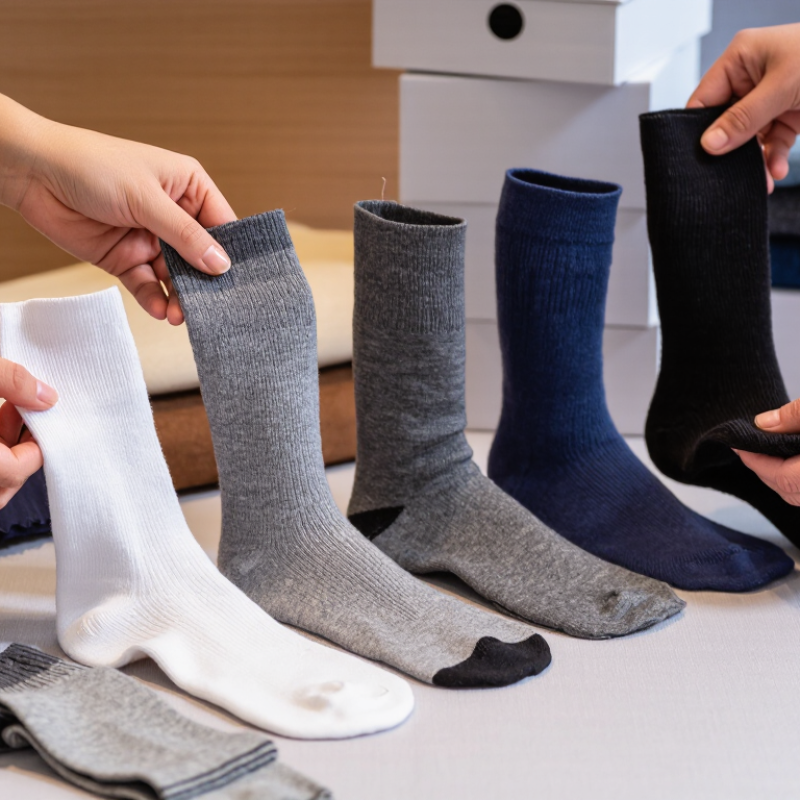
High-top socks cover more of the lower leg than crew styles, making them useful for work boots, basketball shoes, and cooler-weather outfits. For wholesale buyers, that added coverage is a practical selling point, but it also raises expectations for fit. A cuff that slides down can turn a promising sample into slow-moving stock. Fit matters.
Grand View Research estimated the global socks market at US$42.1 billion in 2023 and projected a 6.4% compound annual growth rate from 2024 to 2030. This figure covers socks broadly, not high-top styles alone. That distinction matters: the report signals category demand, but it cannot confirm how quickly a particular height or knit will sell. This is an imperfect proxy.
Buyers can compare samples by checking cuff recovery after repeated stretching, toe-seam feel, and fabric thickness inside a shoe. Request size measurements after washing, not only fresh-from-factory specifications. Cotton-rich blends may feel soft, while synthetic fibers can support quicker drying; the right balance depends on the intended use. Ask suppliers for test methods and batch tolerances, then inspect a production sample before placing a large order. Small differences in leg length can affect comfort and repeat purchases.
| Buyer Consideration | Common Options or Specification | Wholesale Relevance |
|---|---|---|
| High-top definition | A longer leg section than an ankle sock; “high-top” is not a universally standardized sock-height measurement. | Confirm the finished leg length in centimetres and the measurement method on the product specification sheet. |
| Fiber composition | Common blends include cotton, polyester, nylon, and elastane. The exact percentages depend on the intended use and construction. | Specify fiber percentages and required labeling before sampling and bulk production. |
| Yarn and fabric feel | Options can include combed cotton yarn, synthetic yarns, and blended yarns; softness and performance depend on yarn, knit, and finishing. | Approve a physical sample to assess hand feel, stretch, thickness, and appearance. |
| Construction | Common features include a ribbed leg, knitted foot, reinforced heel and toe, and a shaped heel. | List required construction details clearly so samples and production can be checked against the same specification. |
| Cuff and fit | Cuffs may use rib knitting and elastane-containing yarns to help provide stretch and stay-up performance. | Evaluate cuff comfort and retention during wear testing; avoid specifying tightness by appearance alone. |
| Size range | Adult and youth size ranges are typically defined by the supplier’s foot-length or shoe-size chart. | Request the size chart and confirm the target market’s sizing system before placing an order. |
| Thickness and use | Lightweight, medium-weight, and heavier constructions can be developed for different footwear and seasonal needs. | State the intended use and evaluate thickness, fit inside footwear, and comfort on a sample. |
| Color and design | Solid colors, stripes, color-blocking, and knitted-in patterns are common design options. | Confirm color references, placement, size grading, and whether artwork is knitted, printed, or embroidered. |
| Quality checks | Checks may cover measurements, pair matching, stitching, color consistency, labeling, and visible defects. | Agree on inspection criteria and sampling procedures before production begins. |
| Packaging | Typical formats include pairs with a paper band, a hanger card, or a retail-ready pack; bulk packing may also be available. | Specify pack quantity, barcode and label requirements, carton markings, and packaging materials in the purchase order. |
| Minimum order quantity | MOQ is supplier-specific and may differ by style, color, size, and customization. | Request the MOQ for each color and size breakdown rather than relying on a general product-page figure. |
| Lead time | Timing varies with sampling, material availability, order size, customization, and production scheduling. | Obtain separate confirmed timelines for sample approval, bulk production, and shipment. |
| Cost quotation | Price depends on materials, construction, order quantity, customization, packaging, and delivery terms. | Compare quotations using the same specification, quantity, packaging, and shipping basis. |
Specifications and production terms vary by supplier and order. Confirm measurements, composition, quality requirements, MOQ, pricing, and lead time directly in a written quotation and approved sample.
They cover more of the lower leg than crew socks. They can suit work boots, basketball shoes, and cooler-weather outfits.
A secure cuff helps keep socks in place. If it slides down, comfort may suffer and stock may sell more slowly. Fit matters.
Check cuff recovery, toe-seam feel, heel fit, and fabric thickness inside a shoe. Stretch the fabric and look for uneven density.
Record measurements before and after washing. Use a consistent wash cycle, then compare leg length, width, and overall fit.
Request yarn composition and clear specifications for each fiber. Cotton-rich blends may feel soft, while synthetic fibers can dry faster. The best mix depends on use.
Compare production samples in the intended size range. Check measurements, cuff stretch, seams, and reinforcement after washing. A sample can fool you.
Ask for realistic lead times, capacity, minimum order quantities, inspection criteria, and test results. Confirm carton quantities and packaging details in writing.
Broad market figures suggest demand for socks overall, not a guaranteed sales rate for high-top styles. Treat them as context, not a forecast. A little uncertainty remains.
Approve a pre-production sample and set written tolerances. Photograph defects beside a ruler, and keep a sealed reference pair. Check the shipment, too.
High Top Socks have become a useful wholesale product for buyers seeking distinctive styles, dependable everyday wear, and options for different retail channels. China’s sock manufacturing industry supports this market through specialized production facilities, coordinated material sourcing, and processes that can accommodate both larger orders and customized designs. Understanding how production, sampling, and quality checks fit together can help buyers make informed decisions.
When comparing suppliers, wholesale buyers can assess manufacturing experience, product range, material choices, construction quality, communication, and order flexibility. Reviewing samples and confirming specifications before production can reduce misunderstandings about fit, colors, sizing, and packaging. Buyers should also clarify minimum order quantities, customization requirements, lead times, shipping arrangements, and quality-control procedures. Careful supplier evaluation and clear planning help make High Top Socks purchases more consistent and manageable from initial inquiry through delivery.

 Cmax Textile