Choosing Sport Grip Socks for a business involves more than selecting a color or adding a logo. The right pair should suit the activity, the customer, and the way it will be sold. A Pilates studio may prefer soft, flexible fabric with discreet grip placement. A teamwear retailer may prioritize consistent sizing, durable grip prints, and reliable restocking. Small details matter. Silicone dots that look bold on a sample can feel stiff inside a shoe. A loose heel can slip during movement and undermine an otherwise well-made sock.
Start by defining who will wear the socks and where. Then compare the materials, fit, grip layout, size range, and available customization. Ask suppliers for clear specifications, care instructions, and information about production consistency. Check samples on the intended surface, and wash them before judging grip and fit. These simple tests reveal more than a product description alone. There is no single grip pattern that works for every sport, and “premium” is not a useful specification by itself. Even experienced buyers can overlook comfort when focusing on appearance. That is worth reconsidering. A practical selection process balances performance, customer feedback, price, and supply reliability, while leaving room to revise the product after real-world use.
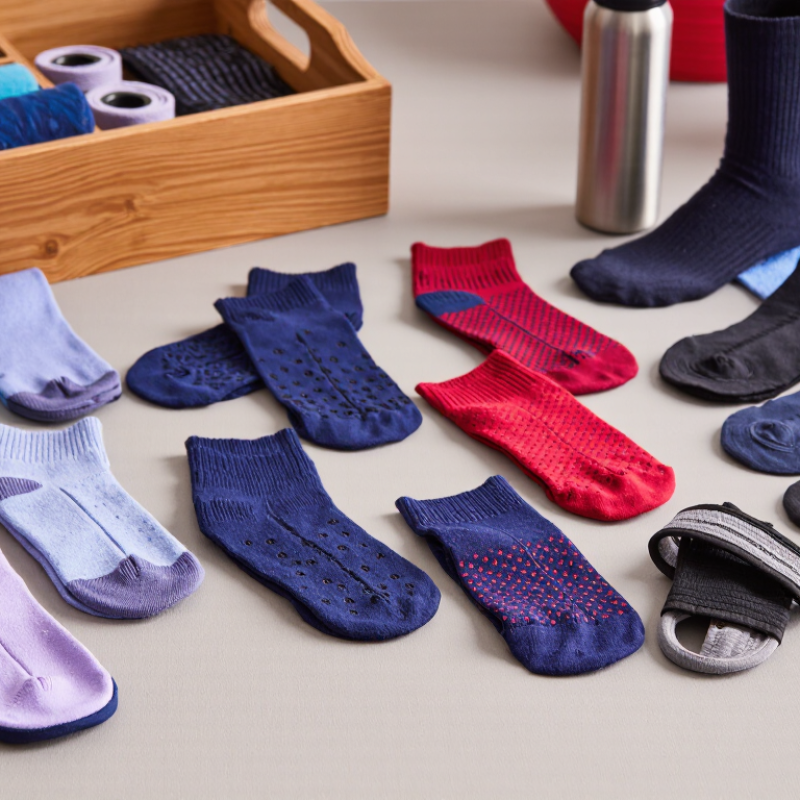
Before selecting sport grip socks, define where and how customers will use them. A boutique yoga studio may want thin, quiet socks with silicone patterns across the sole. A climbing gym, dance school, or rehabilitation clinic may need different coverage, stretch, and wash durability. Ask buyers about floor surfaces, session length, laundering frequency, and common fit complaints.
Look closely.
Then map those needs to your business model and customer groups. Retailers serving casual users may prioritize accessible sizing and clear care instructions. Team suppliers might need consistent bulk availability and repeatable colors. For older customers or people returning to exercise, easy-to-pull cuffs can matter more than bold designs. Ask which users will wear them: beginners, instructors, or frequent competitors.
Request wear samples and test them on the actual floor.
Check whether the grip remains attached after repeated washing. A small trial helps. Do not assume one sock suits every buyer; customer feedback may reveal gaps your first brief missed.
Material choice changes how grip socks feel during a session. Cotton blends feel soft and absorb moisture, but may stay damp during intense training. Polyester and nylon often dry faster and resist abrasion. Elastane adds stretch, helping the sock recover its shape after repeated wear. Small details matter. For business buyers, compare fiber content alongside the intended activity, climate, and expected washing routine. A fabric sample feels different when worn for an hour.
Construction affects both grip and comfort. Silicone or rubberized patterns should cover key contact zones without making the sole feel stiff. Check that grip elements are evenly spaced and firmly attached after several washes. Seam placement matters, too: a raised toe seam can rub inside snug training shoes. Cushioning under the heel and forefoot may suit impact-heavy sports, while thinner soles can preserve court feel. There is no single construction that suits every customer.
Fit should hold the foot securely without squeezing toes or leaving excess fabric at the heel. Review size measurements, stretch recovery, and options for different foot shapes. Test samples during the actual sport, not only while standing in a showroom. I would not treat one wear test as proof; it can miss changes after laundering or longer sessions. Ask testers to note slipping, bunching, pressure points, and whether the grip feels balanced on both feet. A few honest complaints can reveal more than a quick thumbs-up.
Grip socks should match the movement and surface, not just look grippy on a product page. For yoga or Pilates, small silicone dots across the forefoot and heel can support controlled transitions on smooth studio floors. For indoor court training, wider tread zones may offer more contact during lateral steps. More grip is not always better.
Compare the pattern with the sport’s pressure points. A dancer often pivots on the ball of the foot, while a strength trainee may need stable contact under the heel. Check whether the tread stays flexible when the sock bends, and whether it feels secure without making turns awkward. Test samples on the actual floor type when possible. A polished studio floor can behave differently from rubber gym flooring.
Fit changes performance, too. If the sock twists inside the shoe, even a well-designed pattern may shift away from the contact area. Inspect seams, fabric stretch, and grip placement after several washes, not just straight from the package. Small details count. Results can vary with floor finish, moisture, and individual movement, so avoid promising one pattern will suit every sport. Some buyers may prefer more coverage; others may find it restrictive. That trade-off deserves a real wear test.
The 1–5 scores are indicative design-priority ratings, not laboratory measurements or claims about specific products. Court sports typically call for multidirectional traction and forefoot grip; running socks may prioritize secure heel and forefoot contact; yoga and Pilates designs often benefit from broadly distributed grip. Use wear testing with your intended customers to validate pattern choices.
Choosing sport grip socks for resale starts with the supplier, not the logo or color card. Ask for recent production references, documented lead times, and a clear process for handling defects. Request a pre-production sample, then check grip placement, seam feel, stretch recovery, and sizing after washing. One sample can still flatter. Ask whether the bulk order will use the same yarn, silicone application, and inspection method.
Quality checks should be specific. Agree on measurement tolerances, color limits, and an acceptable defect rate before confirming production. Request test records for colorfastness, shrinkage, and grip durability, and ask how samples are selected. Textile Exchange’s Materials Market Report 2024 estimates global fiber production reached 124 million tonnes in 2023. That scale makes material traceability worth discussing, even for a small sock order. A certificate alone is not a full quality system.
Customization should solve a real customer need. Confirm options for sock length, size range, yarn composition, grip layout, and packaging, then check which changes affect minimum order quantities or delivery dates. SFIA’s 2024 Topline Participation Report says 242.3 million Americans took part in at least one sport or fitness activity in 2023. That broad participation does not guarantee demand for your design. Test a small run with actual users; sweaty feet and studio floors can expose problems a showroom sample misses.
Before placing a bulk order, request samples in the exact sizes, colors, and construction you plan to sell. Check how the socks fit after a short training session. Look for slipping at the heel, tight seams, and pressure around the toes. Small details matter.
Test grip on the type of floor your customers use, such as polished wood or indoor court flooring. Try each pair with clean, dry soles, then wash it according to the care instructions. Note whether the grip pattern wears down or the fabric loses shape. A few washes are useful, though they cannot predict months of use. That is an imperfect test.
Compare more than the quoted price per pair. Record minimum order quantities, sample fees, packaging costs, shipping estimates, and production lead times. Ask how sizing consistency and defective items are handled, and request the details in writing. Then compare suppliers using the same specifications; otherwise, a lower quote may reflect thinner fabric or different packaging. A simple comparison sheet helps. I would still leave room for judgment: the cheapest sample may feel fine at first, but less comfortable after an hour of play.
Comparison checklist for evaluating sample options before requesting a bulk quotation
| Option | Typical construction | Grip pattern | Sample checks | Indicative sample cost (USD/pair) | Indicative bulk range (USD/pair) | Best suited for |
|---|---|---|---|---|---|---|
| Basic crew sock | Cotton or cotton-blend knit; standard cushioning | Small silicone dots on the sole | Check dot adhesion, fit after washing, and seam comfort | $3–$8 | $1.50–$4.00 | Entry-level ranges and promotional use |
| Performance crew sock | Nylon/polyester blend with elastane; targeted ventilation and cushioning | Silicone zones across the forefoot and heel | Test moisture feel, stretch recovery, and grip during lateral movement | $5–$12 | $2.50–$6.00 | Regular training and studio sports |
| Low-cut training sock | Lightweight synthetic blend; low-profile heel tab | Compact silicone print beneath the ball of the foot and heel | Check heel slippage, edge curling, and grip coverage in sports shoes | $4–$10 | $2.00–$5.00 | Indoor training and customers preferring a discreet fit |
| Thick-cushion crew sock | Denser terry cushioning at the sole; reinforced heel and toe | Larger silicone shapes with broader sole coverage | Assess shoe fit, cushioning compression, and grip wear after repeated use | $6–$14 | $3.00–$7.00 | Users seeking extra cushioning for indoor activities |
| Custom-design option | Knit, yarn blend, cushioning, and packaging specified to order | Placement, shape, and coverage defined in the approved design | Approve pre-production sample, color, sizing, packaging, and wash performance | $8–$20+ | $3.50–$9.00+ | Distinctive assortments and private-label programs |
Pricing note: Figures are indicative planning ranges, not supplier quotations. Actual prices depend on order quantity, yarn and grip specifications, customization, packaging, shipping, and destination. Request comparable quotes using the same specification and confirm minimum order quantity, sample fees, production lead time, and payment terms before ordering.
Start with the activity, floor surface, session length, and washing routine. A yoga studio may prefer thin socks, while a dance school may need different coverage.
Ask whether users are beginners, instructors, or frequent competitors. Note fit complaints, cuff comfort, and preferred sizing. Small details matter.
Cotton blends feel soft and absorb moisture, but can stay damp during intense sessions. Polyester and nylon often dry faster; elastane helps socks recover their shape.
Check that silicone or rubberized patterns cover key contact areas. They should feel secure, not stiff, and stay attached after repeated washing.
A raised toe seam can rub inside snug shoes. Heel and forefoot cushioning may suit impact-heavy sports, while thin soles preserve court feel.
Look for a secure fit, comfortable toes, and no excess fabric at the heel. Test stretch recovery and options for different foot shapes.
Ask them to note slipping, bunching, pressure points, and grip balance on both feet. Test during the actual sport, not just while standing.
Probably not. A short trial can miss changes after long sessions or laundering. Test socks on the actual floor and collect honest feedback.
Choosing Sport Grip Socks for your business starts with understanding who will wear them and how they will be used. Consider your target customers, the sports or activities they prefer, and the level of comfort and support they expect. Compare materials for breathability, durability, and stretch, while checking construction details such as cushioning, seams, and fit. A well-fitting sock can help reduce discomfort during movement and make the product more appealing to customers.
Next, assess grip patterns and whether they suit the intended sport, since different activities may call for different levels and placements of traction. Review each supplier’s quality controls, production consistency, and customization options before making a decision. Request samples to examine comfort, fit, grip, and workmanship firsthand. Finally, compare sample results, pricing, minimum order quantities, and delivery expectations to find an option that balances product quality with your business needs before placing a bulk order.