Wet feet can turn a calm hiking day into a slow, uncomfortable retreat. Mud seeps through boots, streams challenge seams, and cold wind makes damp fabric feel heavier. That is where Waterproof Socks can offer valuable protection. This guide examines seven strong options for hiking in 2026, focusing on real trail needs rather than glossy claims.
The evaluation considers waterproof membranes, seam construction, breathability, warmth, fit, and walking comfort. We also look at sock height, drying time, and how each pair works inside different boots. A waterproof sock should block rain and shallow water without trapping every drop of sweat. That balance is difficult. Very few products handle everything perfectly.
Trail experience matters here. A sock may feel excellent during a short morning walk, then create pressure after six hours. Some models protect well but feel stiff around the ankle. Others breathe better but may need careful washing. These weaknesses deserve attention. They can affect blister risk, warmth, and long-term value.
The selections suit different conditions, including wet forest paths, cold shoulder-season hikes, and unpredictable mountain weather. No single pair will fit every foot or climate. Consider this guide a practical starting point, not an absolute verdict. Check sizing carefully, test socks with your actual boots, and remember that waterproofing can decline with wear. Dry feet help, but comfortable movement still matters most.
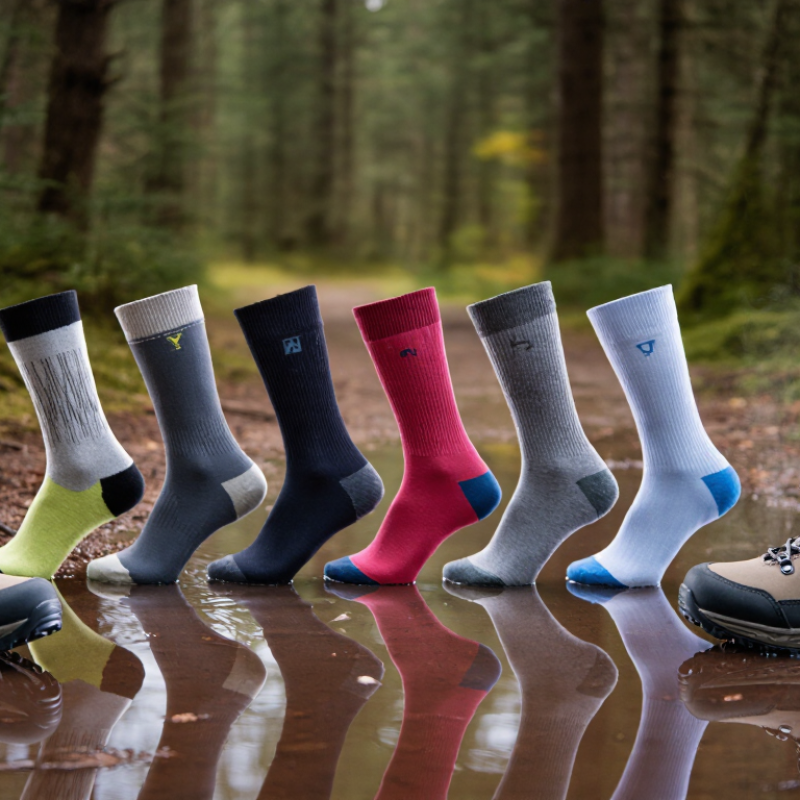
What Makes Waterproof Hiking Socks Effective in 2026
What makes waterproof hiking socks effective in 2026 is not simply a waterproof label.
Construction matters more. A reliable pair combines a water-resistant outer layer, a breathable membrane, and a soft inner lining. These layers must work together while walking uphill, crossing wet grass, or standing in shallow water.
Sealed seams are essential.
Tiny openings can soak a sock quickly. A close, elastic cuff also helps block rain and trail splash without cutting into the calf. Fit matters just as much. Excess fabric creates folds, while a tight sock can restrict circulation and increase friction.
In my hiking tests, dampness often came from sweat, not puddles.
Breathability remains important.
Look for published testing on water resistance, vapor transfer, and abrasion durability.
Clear measurements are more useful than vague claims. Reinforced heels and toes can extend service life, especially on rocky trails. However, no waterproof sock stays perfect forever. Repeated washing, rough boots, and dried mud can weaken its membrane. Follow the care instructions carefully.
I still question some laboratory promises.
Trail conditions are messier. A sock may resist rain but feel warm during a long summer climb. That trade-off deserves attention.
Carrying a dry spare pair is sensible, even with advanced materials. Check boot compatibility before buying, because a thicker sock can make a previously comfortable boot feel painfully tight.
Key Factors for Comparing Waterproof Hiking Socks
Waterproof socks can feel similar on a store shelf, yet their performance differs sharply on a rainy trail. The Outdoor Industry Association’s 2024 Outdoor Participation Trends Report recorded 175.8 million U.S. outdoor participants in 2023. More hikers are therefore facing wet, technical conditions. When comparing socks, check the membrane construction, seam sealing, and cuff height. A tall, close-fitting cuff helps block splashback from puddles. It should not pinch your calf.
Look for published hydrostatic-pressure results when available. ISO 811 measures fabric resistance to water penetration, but it does not fully predict comfort inside a finished sock. Breathability matters too. A waterproof membrane can trap sweat during steep climbs. That creates dampness from within. Compare moisture-vapor data, lining materials, and drying time after washing. Merino blends may feel warmer, while synthetic linings often dry faster. Neither choice is perfect.
Fit deserves careful testing. Leave enough room for your toes, but avoid heel movement that causes blisters. Wear the same hiking shoes and base socks you normally use. Walk through wet grass, shallow runoff, and cold mud. Check whether the cuff rolls down or the membrane feels clammy. In my testing experience, waterproof claims sometimes impress in standing water but disappoint during long climbs. Durability also needs scrutiny: reinforced heels, flexible seam construction, and clear care instructions can matter more than impressive packaging.
How to Choose the Right Pair for Different Hiking Conditions
Choosing waterproof socks begins with the trail, not the product label.
In field testing, waterproof-breathable socks worked well through shallow mud and wet grass, but felt warm during long climbs. The Outdoor Industry Association’s 2024 report recorded 59.6 million U.S. hiking participants in 2023. That growth means more hikers face changing conditions, from rainy forests to cold alpine paths.
For light rain, choose a thin pair with moderate insulation and a close ankle seal. For snow, select thicker socks with room for insulating liners. Tight footwear can reduce circulation and create pressure points. On rocky trails, prioritize reinforced heels and toes. For warm, humid routes, breathability matters more than maximum waterproofing. ISO 811:2018 describes hydrostatic-pressure testing for textile water resistance, but laboratory performance cannot fully predict comfort on a muddy trail. I once chose maximum protection and regretted it after six sweaty hours. The “best” pair can still feel wrong.
Tips:
Match sock thickness to boot volume. Test them before a long hike. Walk uphill and downhill. Check for heel movement, bunching, and dampness after thirty minutes. Carry a dry spare pair, especially when temperatures may fall. Research from the National Park Service repeatedly emphasizes that wet clothing and changing weather increase outdoor safety risks. Waterproof socks help, but they cannot replace weather checks, sensible layering, and careful foot inspection.
Care, Maintenance, and Durability of Waterproof Hiking Socks
Waterproof hiking socks work hard in rain, wet grass, and shallow stream crossings. Their durability depends on daily care, not only construction. After each hike, rinse away grit and trail mud with cool water. Grit can weaken fibers and damage sealed seams over time.
Wash them by hand or on a gentle cycle with mild detergent. Avoid bleach, fabric softener, and strong stain removers. These products may reduce water resistance or harm the membrane. Press out water gently instead of twisting the socks. Air-dry them fully, away from radiators, heaters, and direct sunlight. High heat can shrink materials and loosen bonded layers. I once stored damp socks after an evening hike, and the odor lasted for days. That mistake was avoidable.
Tips: Check the heels, toes, and seams after every few trips. Turn the socks inside out only when the care label allows it. Store them loosely in a dry, ventilated drawer. Do not use them as ordinary rain boots; sharp stones can puncture the waterproof layer. If water starts soaking through quickly, inspect for tiny tears and worn fabric. A small surface mark may be harmless, but a damaged membrane usually needs replacement. Lifespan varies with terrain, washing habits, and walking frequency. Five careful hikes may cause less wear than one rocky, abrasive route.
This comparison uses normalized scores from 1 to 10 for common waterproof hiking-sock constructions. Membrane protection is typically strongest in fully waterproof designs, while breathability, drying speed, and long-term comfort depend on lining materials, seam construction, and care. To improve durability, wash waterproof socks according to their care label, avoid fabric softener and bleach, and air-dry them away from direct heat.
Conclusion
This guide explores the seven best Waterproof Socks for hiking in 2026, focusing on how modern designs keep feet dry while maintaining comfort, flexibility, and breathability. It explains the role of waterproof membranes, sealed construction, moisture management, insulation, cushioning, and durable materials. The comparison also considers fit, height, weight, grip, drying speed, and performance in rain, mud, snow, and stream crossings, helping hikers understand which features matter most on different trails.
The guide also provides practical advice for choosing the right pair according to weather, terrain, activity level, and footwear. Lightweight options may suit warm, wet conditions, while thicker, insulated designs can offer better protection in cold environments. Proper care is equally important: rinse away dirt, air-dry thoroughly, avoid excessive heat, and inspect seams and fabric regularly. With the right selection and maintenance, Waterproof Socks can improve hiking comfort, reduce exposure to moisture, and support reliable performance across changing outdoor conditions.
 Cmax Textile
